Why RARS
AI agents are everywhere. But the way we're building them recreates the exact dysfunction they're supposed to fix. A reasoning-assisted recursive system (RARS) is what comes after.
Codify Your Operating Model
The line between business functions and technical functions doesn't exist anymore. Your hiring process, your deal pipeline, your compliance workflow: these are software systems. They have logic, exceptions, dependencies, and failure modes. The only difference is that most of them are still running on humans, spreadsheets, and duct-tape integrations instead of actual runtimes.
If we're serious about autonomous operations, we have to start treating our organizations the way we treat software. Design them the same way. Apply the same controls. Expect the same determinism. That means codifying your business and operating models: turning the way your organization actually works into something a machine can execute, enforce, and evolve.
That's what RARS does. It gives you the infrastructure to codify your operating model and execute it as a living software system.
From Isolated Applications to Composable Operating Models
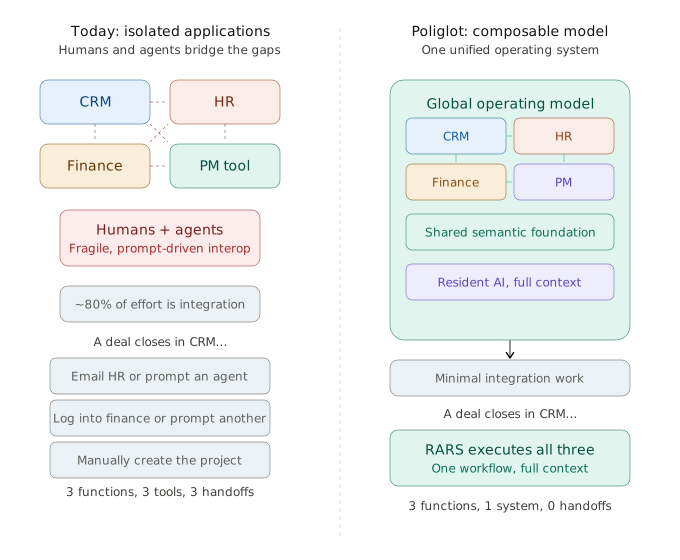
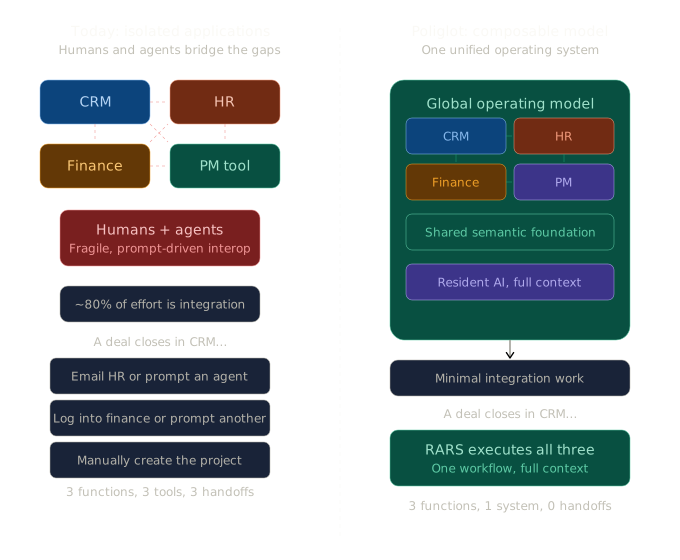
Today's software is a collection of siloed tools: a CRM, an HR system, a PM tool, a finance platform. The "integration layer" between them is humans and, increasingly, non-deterministic agents that rely on prompts for interoperability. Neither has full context into the relationships and concept translation between systems. Both are fragile. If we're to become autonomous in nature, our global "system" needs to be designed like a software system: composable modules (your Matrix) snap together into a unified operating model. When a deal closes, the system doesn't need three people emailing three departments or three agents prompting three APIs. One agent, with full context across every domain, executes the entire cross-functional workflow.
From Multi-Agent Coordination to Shared Context
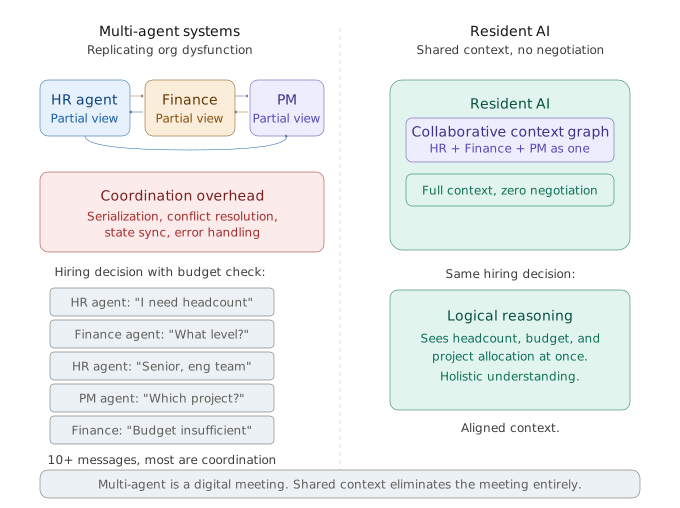
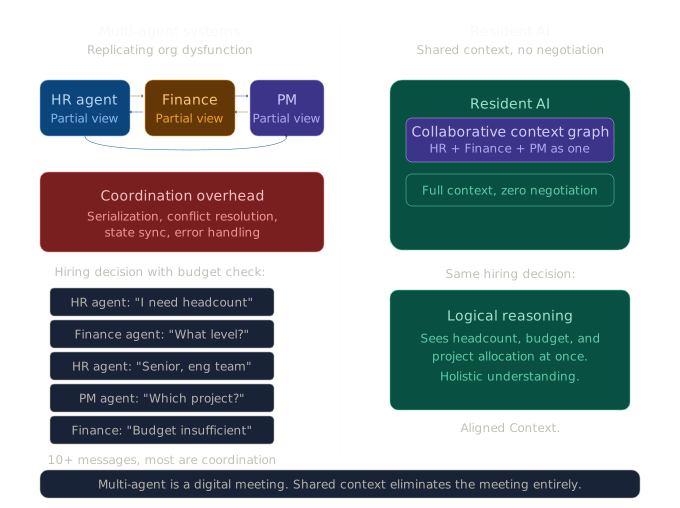
The industry is building multi-agent systems where specialized AI agents negotiate and pass messages to coordinate work. This is a digital recreation of the exact organizational dysfunction that makes human organizations slow. Departments with partial views of the world, communicating through lossy channels, trying to build shared understanding through back-and-forth. Digital systems don't have the constraints that make human departments necessary. One resident AI with full context eliminates the coordination problem entirely. We don't need more communication channels. We need fewer.
From Static to Living Application Layers
Over the last year, AI got unfathomably good at writing code. Most people saw this and thought: great, AI can write more software faster. We saw it and thought: what if we wrote less software? What if we built a continuous programming runtime that evolved on its own when the need arose? What if the AI just lives inside the runtime?
So we threw out every existing approach to AI tooling and built something new. Sorry.
RARS is a programming runtime specifically designed for AI. Not a framework it calls into. Not a toolkit it invokes. An environment it inhabits — and reshapes around itself based on what the work demands.
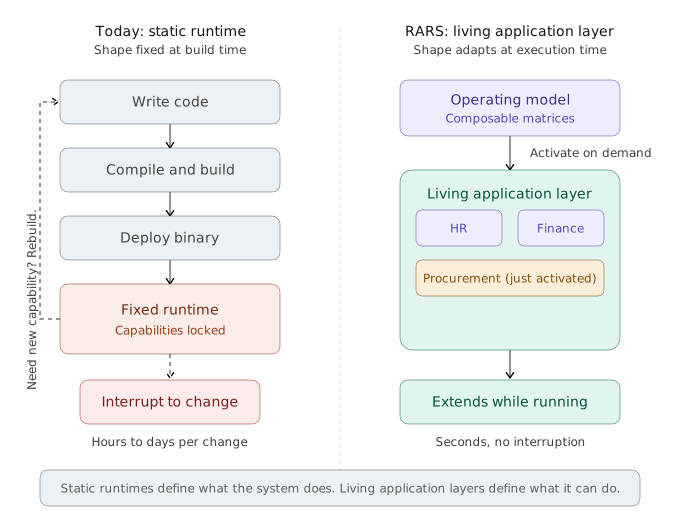
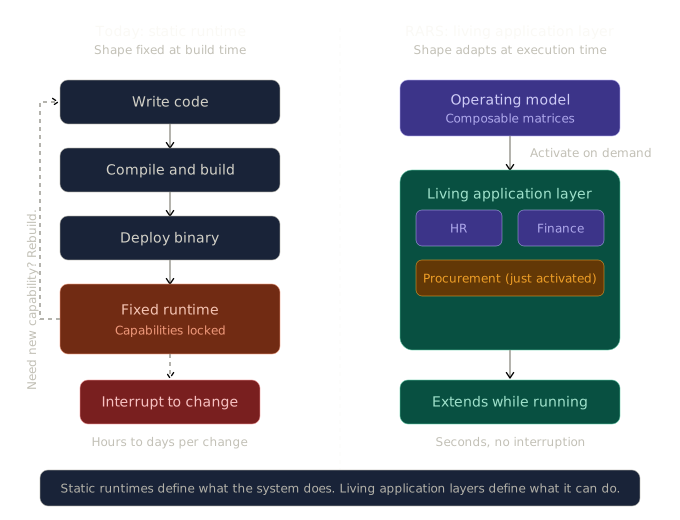
Every application you've ever used is a static runtime. Java, Python, a React app: the shape is fixed at build time. To add a capability, you stop the system, modify the code, rebuild, redeploy. The system is what it was when you compiled it.
RARS doesn't work this way. Your matrix defines concepts, rules, constraints, and capabilities for a business domain. When the AI starts working, it activates the domains it needs just-in-time. When the work shifts from HR to finance, the runtime doesn't call a different service. It grows. Finance concepts, finance rules, finance actions compose into the same environment alongside everything already active. No rebuild. No interrupt. No downtime.
This is the symbiosis of agentic reasoning and deterministic execution. The AI plans. The symbolic runtime enforces. Your matrix is the raw material: the type system, the constraints, the available operations. RARS assembles it into a purpose-built execution environment for whatever it's doing in the moment.
Reviewing Orchestration, Not Implementation
When an AI writes a program from scratch, it generates the service layer, the business logic, the validation rules, and the orchestration. You have to review all of it. In RARS, the service layer and business logic are pre-defined and pre-approved in your codified operating model. RARS manifests applications of your capabilities in the moment, so you only have to review one layer (if at all).
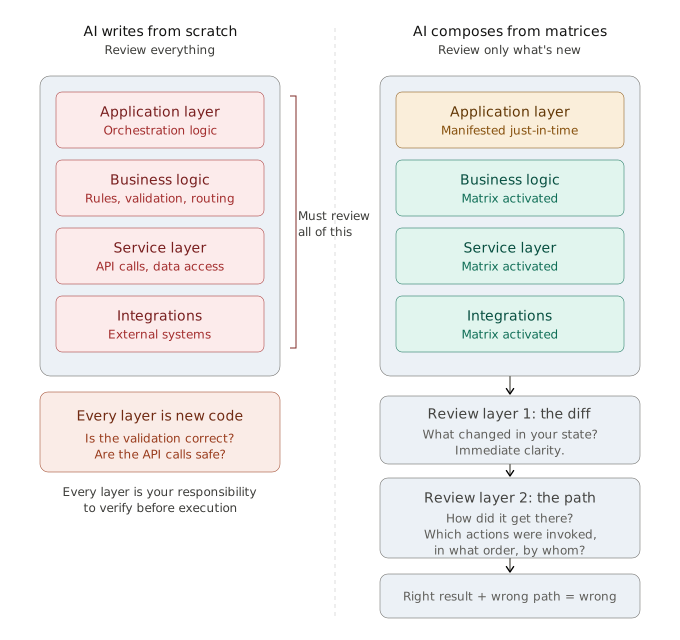
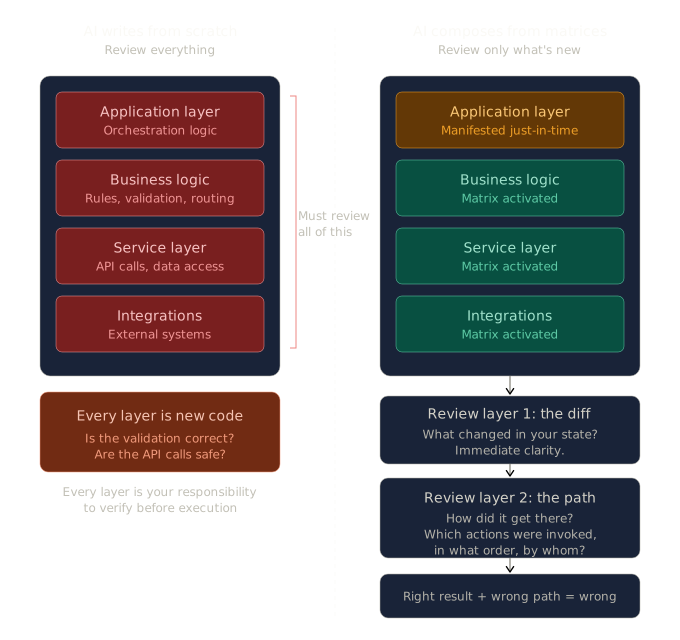
What changed? A six-line semantic diff. How did it get there? Which pre-approved actions were invoked, in what order? Need more? Full provenance on any individual change, down to who, why, when, and under what authority. You're reviewing the orchestration, not the implementation. The building blocks are already trusted.
You're reviewing changes to the live state of your business systems.
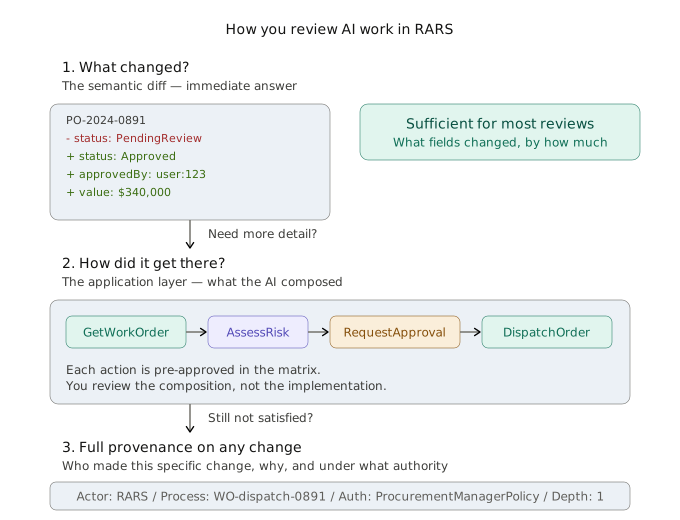
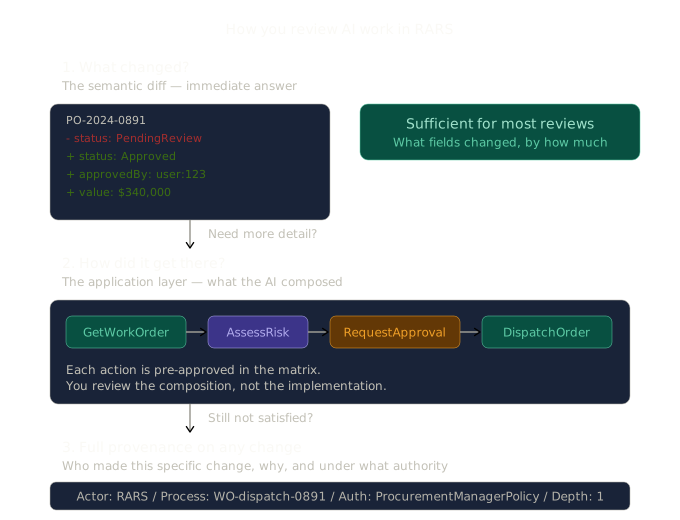
"GIT diff" for your business objects.
From Prompt-Based Trust to Structural Guarantees
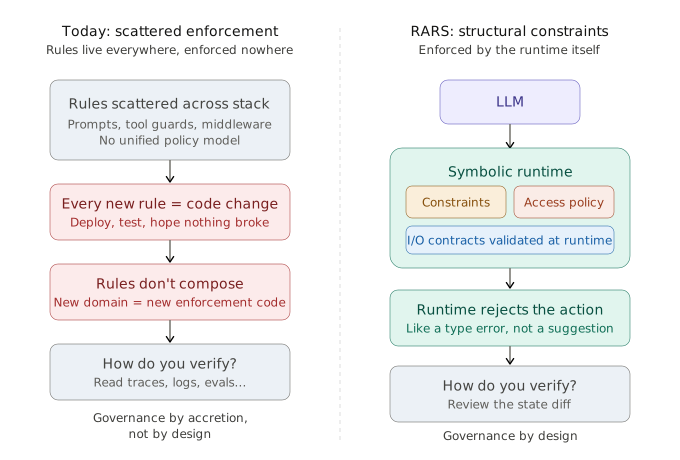
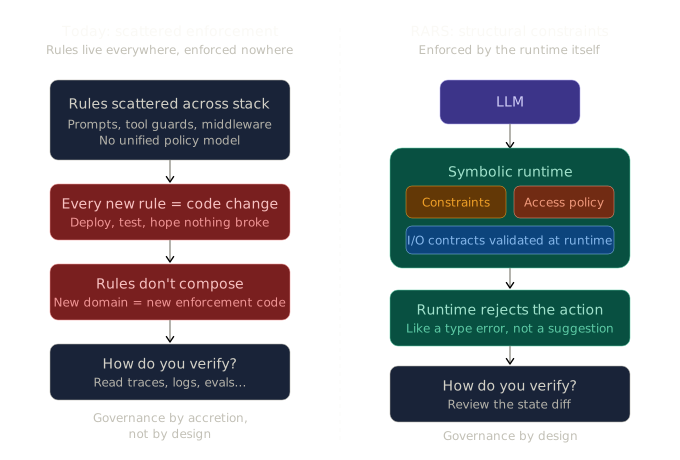
Current AI systems are constrained by text instructions. The AI is told not to do something and we hope it listens. RARS grounds AI execution in a symbolic runtime where your business rules aren't suggestions, they're type constraints. The AI literally cannot execute an action that violates a SHACL shape, the same way a Java program can't assign a string to an integer. Enforcement comes from the runtime, not the prompt.
Explore
We provide the tools to codify your operating model, and Poliglot OS executes it. This isn't another AI agent framework. It's the runtime a resident AI inhabits, grounded in your rules, constraints, and the live state of your business, with full provenance on every action.